A Letter From Our CEO
Artificial intelligence is reshaping the pedagogical and philosophical traditions of our institutions, and whether you are an advocate or fervent critic, the force of this technological arrival cannot be ignored. AI literacy—which we refer to not as the usage of AI tools, but as a critical understanding of the implications they hold for our faculty and students—has become an essential intellectual responsibility for educators. It empowers those who resist AI to navigate around it with intention, while safeguarding students who engage with it beyond the reach of the classroom. AI literacy also equips those who seek to experiment with new pedagogical possibilities to do so in ways that preserve the rigor, inquiry, and critical consciousness that define meaningful education.
In countless conversations with K–12 educators across the country, a shared sentiment emerged: Teachers are not searching for more consultants, they are seeking guidance from other teachers who also understand the realities of the classroom. Educators want to learn from others who know what it means to stand in front of students, mediate competing demands, and teach at a moment when knowledge itself is rapidly evolving. The most trusted source for guidance as their peers who have experimented, stumbled, recalibrated, and moved forward through the early stages of this technological shift.
That collective desire shaped the ethos of CONSYLIUM.
The composition of our AI Advisory Boards reflects the breadth of knowledge required of modern schools. Instructional design, AI policy, academic research, student innovation, community engagement, and cultural transformation each play a critical role in shaping a holistic response. These domains are not siloed at CONSYLIUM. They are interwoven into a unified approach that honors the interconnected nature of educational ecosystems.
In parallel, our CONSYLIUM Research Fellows collaborate with school partners to analyze institution-specific data that illuminates student needs with greater depth and allows leaders to craft strategies that are precise rather than speculative. Their research-informed insights are paired with our commitment to ongoing professional development so educators remain active participants in the unfolding future rather than passive observers.
As a lifelong educator, I have benefitted greatly from the profound value of peer-to-peer support. The true promise of our work can only be unlocked through the voices we bring to the table and the shared willingness to learn in community. CONSYLIUM was built on that principle, and we hope you will put your trust in us to help you navigate through this evolving landscape.
In partnership,
Sy Stokes, Ph.D.
Founder & CEO
CONSYLIUM
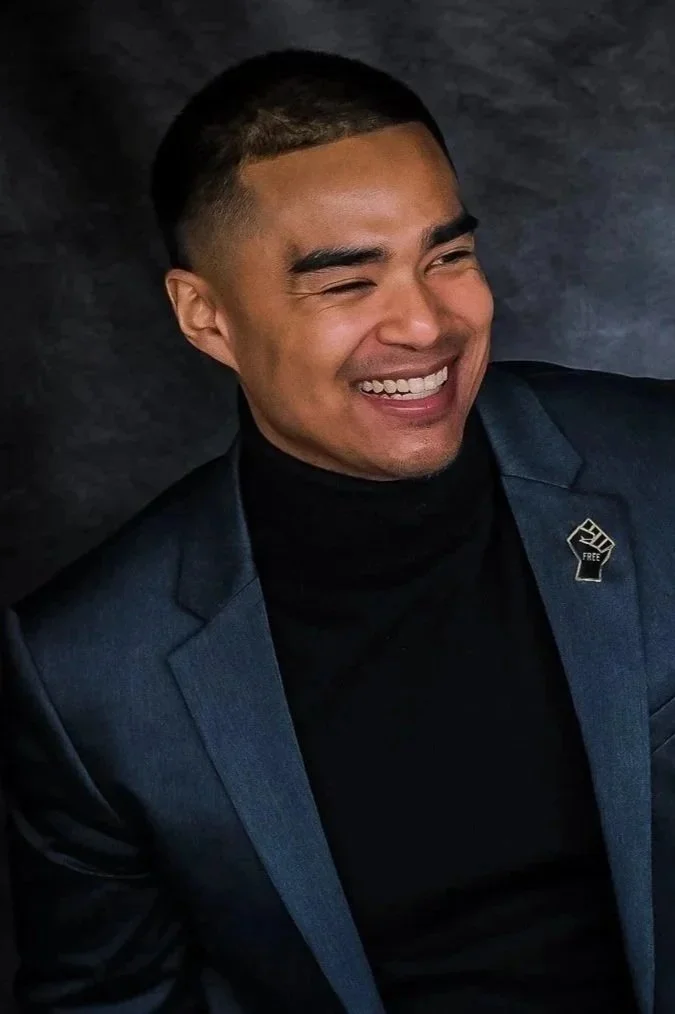
Sy Stokes, Ph.D.
Founder & CEO
CONSYLIUM
Dr. Sy Stokes (he/him) is the Founder and Chief Executive Officer of CONSYLIUM.
Prior to founding CONSYLIUM, Dr. Stokes was SVP, Head of Global Research for a nonprofit think tank where he led a portfolio of research focused on improving the workplace experiences for diverse populations across several global regions. His career in academia included serving on the faculty at the University of Michigan where he designed and taught courses on race in education for the Horace H. Rackham School of Graduate Studies. He is the founder of two K-12 after school programs in Richmond, California, and South Central, California, each focused on providing college access to marginalized student populations. He has traveled across the nation to K-12 schools, colleges and universities, and nonprofit organizations facilitating professional development seminars and serving as an education consultant for public and private institutions. As an award-winning scholar and practitioner, he was appointed as a Senior Fellow at Harvard University for the Center on the Developing Child.
Dr. Stokes has delivered over 200 keynote speeches and guest lectures for various institutions and initiatives, including the White House Summit on Educational Excellence for African Americans (Obama administration), Stop AAPI Hate, and various Fortune 500 companies.
He received his B.A. from the University of California, Los Angeles (UCLA), an M.S. Ed. from the University of Pennsylvania, and Ph.D. from the University of Southern California.